

DAVID BOWIE – A CULTURAL LEGACY
Today marks ten years since the passing of David Bowie, who sadly passed away in 2016. Bowie’s position as a legendary musician and innovator is one that’s irrefutable; a legacy that is stamped across decades of music and culture – and one that continues to have an influence today.
Bowie’s early career was initially a series of false starts and failures, which nevertheless provided a neccesary learning curve. But the release of 1969 chart hit ‘Space Oddity’ helped to make his mark, later bolstered by his embracing of glam rock culture in the guise of Ziggy Stardust, a smart concept that combined an intriguing persona with imaginative lyrical ideas and (crucially) dynamic music. Showcased on 1972 album The Rise and Fall of Ziggy Stardust and the Spiders from Mars, Bowie employed hard rock alongside experimental pop to craft something that gripped the public’s imagination.
Subsequently, Bowie’s knack for reinvention and absorbing new influences was something that was threaded through later album releases such as Aladdin Sane, Diamond Dogs and Young Americans. These various incarnations were later overtaken by new ideas and new inspiration, particularly through his collaborations with Brian Eno and the emergence of the ‘Berlin Trilogy’ albums in the mid to late 1970s. Bowie also went on to work with the likes of Giorgio Moroder, Iggy Pop, Queen and the Pet Shop Boys among others Bowie’s history of collaborations is something that Blitzed explored previously).
With the arrival of the 1980s, it would be easy perhaps to consider Bowie a spent force. Yet his entry into the new decade was heralded by No. 1 single ‘Ashes to Ashes’ (and cemented by its parent album Scary Monsters (and Super Creeps). The iconic promo video for that single was, of course, an intriguing bridge between Bowie and the culture of the Blitz Club generation.
Outside of music, Bowie was also branching off into film work which featured acclaimed cult titles including The Man Who Fell to Earth and Merry Christmas, Mr. Lawrence and later by films such as Labyrinth, Basquiat and The Prestige. But music remained his central focus and he entered the second decade of the 2000s with critically acclaimed album The Next Day. Yet this period of his life was rocked with the diagnosis of liver cancer. The troubling news was something that Bowie initially kept private, keen to throw himself into work which included a new musical, Lazarus whose debut marked Bowie’s final public appearance on opening night.
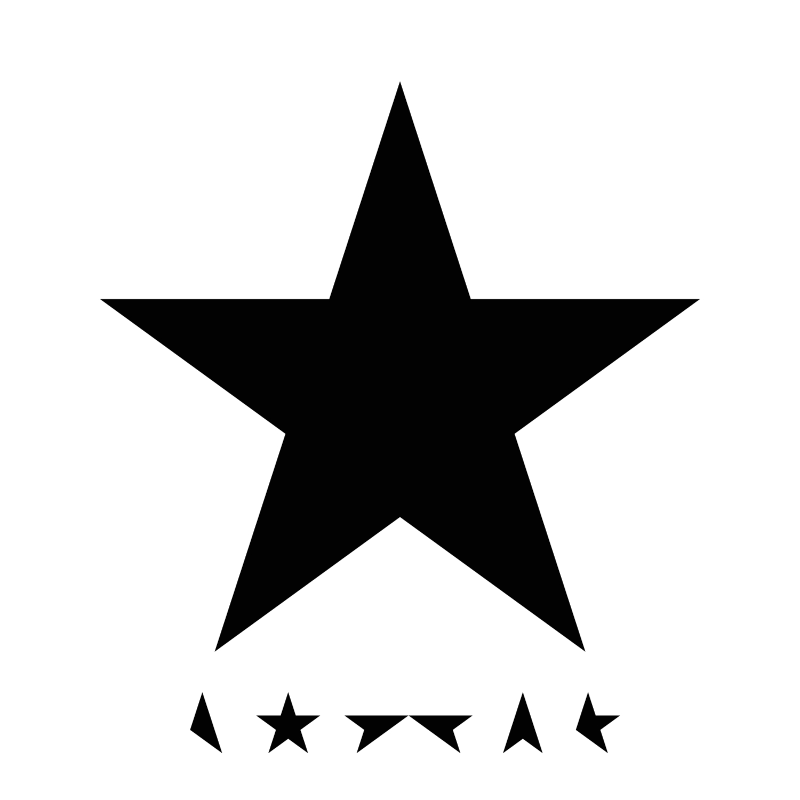
Bowie’s twenty-sixth and final studio album Blackstar saw its release on 8th January 2016 (Bowie’s 69th birthday) and was met with critical acclaim. Blackstar became his first album to reach No. 1 in the US, topped charts in over 20 countries, and later won five Grammy Awards. He died two days later. Commenting on the album, Bowie’s long-term collaborator and co-producer Tony Visconti said, “He made Blackstar for us, his parting gift”.
The years since Bowie’s tragic passing have been surprisingly prolific and marked by some significant events. At the 59th Annual Grammy Awards in 2017, Bowie won all five nominated awards: Best Rock Performance; Best Alternative Music Album; Best Engineered Album, Non-Classical; Best Recording Package; and Best Rock Song. Meanwhile, his music continues to occupy a presence in the 2000s through a variety of special releases. It’s an era that’s seen the continuation of retrospective box sets which have helped to lend some perspective on his various decades in music. The final box set, I Can’t Give Everything Away (2002–2016), was released in September 2025 and comprises Bowie’s studio records from Heathen to Blackstar.
Many of Bowie’s classic albums have also celebrated notable anniversaries in recent years with reissues of Diamond Dogs, Hunky Dory and Pin Ups. January also sees a reissue of his 1976 album Station to Station to add to the reissue catalogue.

Bowie’s cultural impact was celebrated by Victoria and Albert Museum in 2013 with the advent of an exhibition titled David Bowie Is. The display was visited by over 300,000 people, making it one of the most successful exhibitions ever staged at the museum. In 2025 the V&A announced that its David Bowie Centre would feature intimate selections from Bowie’s archive as well as a series of other mini-curated displays and installations exploring Bowie’s creative legacy and lasting influence.
New Year’s Day also saw the broadcast of the final episode of the acclaimed series Stranger Things. The final song of the entire series was ‘”Heroes”’, one of Bowie’s best-known and classic songs. It’s a fitting combination which sees Bowie’s music connecting to a modern phenomenon that offers its own impact on the modern cultural landscape.
David Bowie’s untimely passing in 2016 was a tragedy and a shock, a sad event that continues to be felt through the worlds of music and culture ten years later. Unsurprisingly, when news of his death broke, many of his colleagues, collaborators and people who were inspired by Bowie, were keen to add their thoughts on his legacy. “He always did what he wanted to do” commented Tony Visconti, “And he wanted to do it his way and he wanted to do it the best way. His death was no different from his life – a work of art.”
“David’s death came as a complete surprise, as did nearly everything else about him. I feel a huge gap now.” – Brian Eno
“I love you David. You changed my life.” – Boy George.
“You can’t overestimate really what an enormous cultural influence he was.” – Marc Almond.
Yet perhaps the most poignant comment came from Midge Ure who summed it up: “We’re all still walking in his slipstream”.
Bowie’s body of work, his influence across generations and his legacy of fearless innovation and endless reinvention continue to inspire artists and audiences worldwide.
A special event takes place on 17th January to mark the passing of David Bowie. The event, which is being staged at the British Library, is titled David Bowie In Time and features Tony Visconti, Blixa Bargeld, Donny McCaslin, Francis Whately, Gudrun Gut, Harriet Reed, Jehnny Beth, Jonathan Barnbrook, Dr Leah Kardos, Mark Reeder, Nemone, Nicholas Pegg, Nikko Weidemann, Paul Morley, Samira Ahmed, and Sabrina Offord.
Details on the event are available here: https://events.bl.uk/events/david-bowie-in-time